
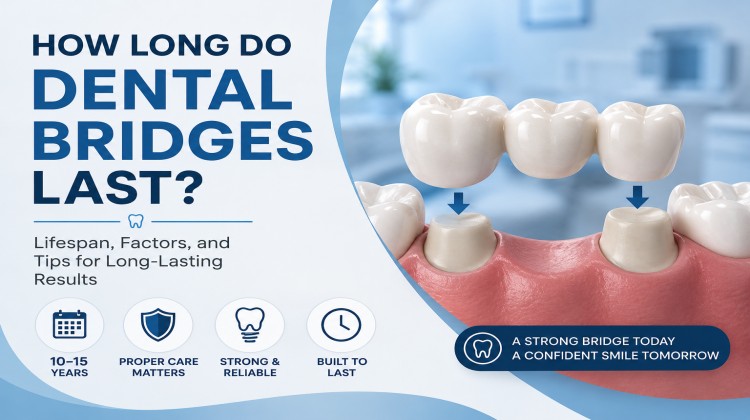
If you’ve recently had a dental bridge placed — or you’re considering one — you’re probably wondering how long you can expect it to last. It’s a fair question, and the answer can help you make smarter decisions about your oral health and budget. The short answer: a well-maintained dental bridge typically lasts between 10 and 15 years, and in many cases, even longer.
What Is a Dental Bridge?
A dental bridge is a fixed restoration used to replace one or more missing teeth. It literally “bridges” the gap between healthy teeth (or implants) on either side of the space. The bridge consists of one or more artificial teeth — called pontics — held in place by dental crowns that are cemented onto the neighboring teeth.
Bridges are a popular, time-tested solution that restores your ability to chew, speak clearly, and smile with confidence. They also help prevent surrounding teeth from shifting out of place, which can trigger a whole chain of dental problems over time.
How Long Does a Dental Bridge Typically Last?
The lifespan of a dental bridge varies depending on the type of material used and how well it’s cared for. Here’s a general breakdown:
| Type | Lifespan | Description |
|---|---|---|
| Porcelain-Fused-to-Metal | 10–15 yrs | Most common type |
| All-Ceramic / Zirconia | 15–20 yrs | Strongest & most natural-looking |
| Implant-Supported | 20+ yrs | Longest lasting option |
With excellent home care and regular professional cleanings, many patients enjoy their bridges well beyond the 15-year mark. Your dentist plays a big role in this — the quality of placement and the precision of fit matter enormously for long-term success.
Factors That Affect How Long Your Bridge Lasts
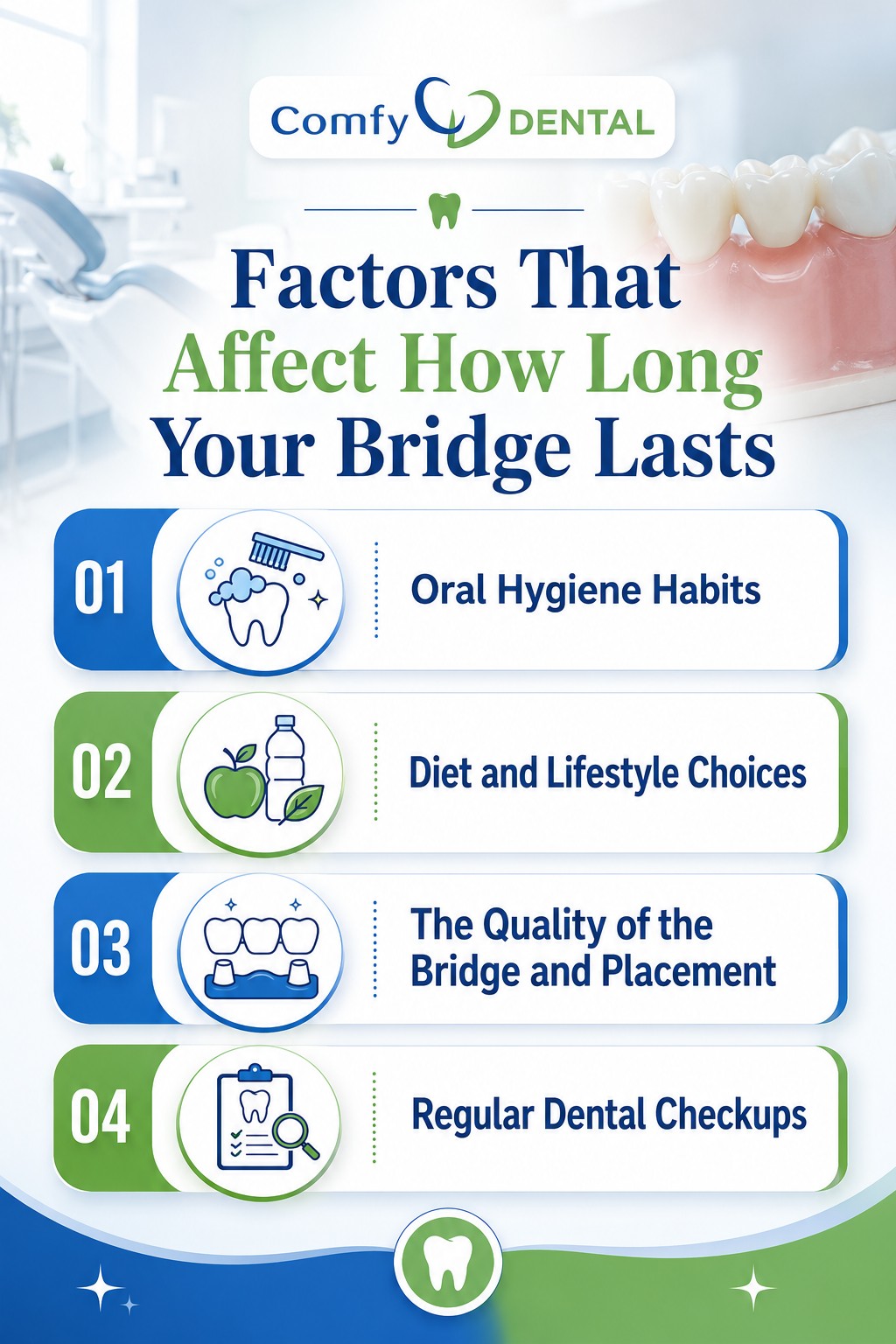
No two patients are exactly alike, and several factors will influence how long your specific bridge holds up:
1. Oral Hygiene Habits
This is the single biggest factor. Plaque buildup around the abutment teeth (the ones holding the bridge) can lead to gum disease or decay beneath the crowns. If the supporting teeth weaken, the bridge fails — it’s that simple. Brushing twice a day and flossing under the bridge with a floss threader or water flosser is non-negotiable. Poor gum health is one of the top reasons bridges fail prematurely.
2. Diet and Lifestyle Choices
Chewing on hard objects (ice, hard candy, pens) or grinding your teeth at night puts significant stress on your bridge. Smokers also tend to have shorter bridge lifespans because tobacco reduces blood flow to the gums and slows healing. A balanced diet and avoiding harmful habits go a long way.
3. The Quality of the Bridge and Placement
A bridge that’s crafted from high-quality materials and placed by an experienced dentist will simply outlast a poorly fitted one. The bite must be perfectly balanced so pressure is distributed evenly. That’s why choosing a skilled provider matters as much as choosing the right material.
4. Regular Dental Checkups
Routine dental exams allow your dentist to spot early warning signs — a loose crown, early decay at the margins, or gum inflammation — before they become bigger problems. Most dentists recommend checkups every six months.
Signs Your Dental Bridge May Need Attention
Don’t wait until something feels seriously wrong. Reach out to your dentist if you notice any of the following:
- The bridge feels loose, wobbly, or shifts when you bite
- Pain or sensitivity around the bridge or the supporting teeth
- Visible cracks or chips in the porcelain
- Difficulty chewing or a sudden change in your bite
- Swollen, tender, or bleeding gums near the bridge
- A persistent bad taste or bad breath that brushing doesn’t fix
Catching these issues early can often mean a simple repair rather than a full replacement. If you’re experiencing any of these symptoms, it’s time to book a dental consultation right away.
Tips to Make Your Dental Bridge Last as Long as Possible
Getting the most out of your investment comes down to consistent, simple habits:
- Brush twice daily with a soft-bristled toothbrush and fluoride toothpaste
- Floss under the bridge every day using a floss threader or water flosser
- Avoid hard or sticky foods that can crack or dislodge the bridge
- Wear a night guard if your dentist recommends one for teeth grinding
- Visit your dentist every six months for cleanings and checkups
- Quit smoking — it significantly increases the risk of gum disease and bridge failure
Bridge vs. Implant: Which Lasts Longer?
This is one of the most common questions patients ask. Dental bridges are less invasive and more affordable upfront, making them a great option for many people. However, dental implants tend to last longer because they replace the tooth root itself and don’t rely on neighboring teeth for support.
For patients missing multiple teeth, All-on-4 dental implants can offer a full-arch solution that lasts decades. The right choice depends on your bone density, budget, and overall dental health — which is why a personalized consultation is always the best starting point.
If you’re weighing your options, our blog on What to Expect Before, During, and After Dental Implant Surgery is a great read to help you understand the implant process.
When Is It Time to Replace a Dental Bridge?
Even the best-maintained bridge won’t last forever. When the cement seal breaks down, when decay develops in the abutment teeth, or when the bridge structure itself cracks, replacement becomes necessary. The good news is that modern restorations have improved dramatically — a replacement bridge or upgrade to implants is often smoother and faster than the original procedure.
Your dentist will monitor your bridge at each visit and give you an honest assessment of when it’s time to consider a new option. Never delay that conversation — a failing bridge can damage the supporting teeth underneath.
Ready for a Smile That Lasts?
Whether you’re considering a dental bridge or need to have an existing one evaluated, the team at Comfy Dental Care is here to help. As the trusted Best Dentist in Las Vegas, Dr. Kevin Khorshid and our compassionate team are committed to giving you a healthy, confident smile that stands the test of time.
Frequently Asked Questions
How long do dental bridges usually last?
Dental bridges typically last between 5 to 15 years, and sometimes longer with proper oral care and regular dental checkups.
What affects the lifespan of a dental bridge?
Lifespan depends on oral hygiene, diet, teeth grinding habits, and how well the supporting teeth (abutments) are maintained.
How can I make my dental bridge last longer?
Brush twice daily, floss carefully around the bridge, avoid hard foods, and visit your dentist regularly for cleanings and checkups.
Can a dental bridge fail or get damaged?
Yes, bridges can fail due to decay in supporting teeth, gum disease, or damage from excessive biting pressure or grinding.
Is replacing a dental bridge painful?
Replacing a bridge is usually not painful because dentists use local anesthesia, but some mild discomfort may occur after the procedure.
When should I replace my dental bridge?
You should replace it if you feel looseness, pain, visible damage, or if your dentist detects decay or wear in the supporting teeth.

ev88apk
ev88apk…Another APK download! I’m always hunting for that hidden gem. Hope it doesn’t drain my battery! Let’s peek at ev88apk and see what we can find.