
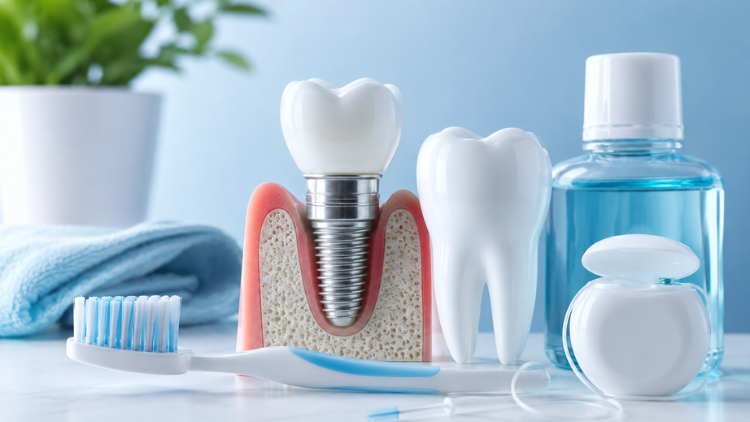
Dental implants are one of the best investments you can make in your smile. They look natural, feel comfortable, and — with the right care — can last a lifetime. But just like your natural teeth, implants need consistent attention to stay healthy and functional. Whether you recently got implants or are considering them, this guide walks you through everything you need to know to protect your investment and maintain a healthy mouth for years to come.
Why Dental Implant Care Matters
Many people assume that because implants are artificial, they don’t require the same upkeep as natural teeth. That’s a common misconception. While the implant itself can’t develop a cavity, the surrounding gum tissue and bone are just as vulnerable to infection and disease as ever. Neglecting your implants can lead to a condition called peri-implantitis — a form of gum disease that attacks the tissue and bone around the implant and can ultimately cause it to fail.
The good news? Caring for dental implants isn’t complicated. A few daily habits and regular dental visits go a long way.
Daily Cleaning Habits for Dental Implants
Brush Twice a Day — The Right Way
Brushing is the foundation of good implant care. Use a soft-bristle toothbrush and a non-abrasive toothpaste to clean around the implant crown, the gum line, and all surrounding teeth. Abrasive products can scratch the surface of your implant crown and create tiny grooves where bacteria hide.
Electric toothbrushes work particularly well around implants — their oscillating heads can reach angles that manual brushing sometimes misses. Brush for at least two minutes, morning and night, making sure to gently clean around the base of the implant where it meets the gum.
Floss Daily — Don’t Skip This Step
Flossing is just as important for implants as it is for natural teeth. Plaque and food debris that collect below the gum line can trigger inflammation in the surrounding tissue, threatening the long-term stability of the implant.
Use implant-specific floss, unwaxed tape, or a water flosser to clean around the crown and under the gum line. A water flosser is especially helpful because it flushes bacteria from areas that are hard to reach with traditional floss — without putting unnecessary pressure on sensitive gum tissue.
Rinse With an Antibacterial Mouthwash
Adding an antibacterial or antimicrobial mouthwash to your routine helps control bacteria in areas your toothbrush and floss can’t always reach. Look for an alcohol-free formula, as alcohol-based rinses can dry out oral tissues over time, which isn’t ideal for maintaining a healthy environment around your implant.
Foods and Habits to Avoid
Watch What You Bite
Your implant crown is tough, but it’s not indestructible. Avoid chewing on hard objects like ice, hard candies, or pen caps, which can crack or chip the crown. If you grind your teeth at night (a habit called bruxism), talk to your dentist about a custom nightguard — grinding puts excessive force on implants and can loosen them over time.
Limit Staining Foods and Beverages
Coffee, red wine, and dark-colored sodas can stain the crown of your implant over time, just like they stain natural enamel. While the staining is cosmetic, it’s a good reminder to rinse with water after consuming these drinks.
Quit Smoking
Smoking is one of the most significant risk factors for implant failure. Tobacco restricts blood flow to the gums, slows healing, and creates an environment where bacteria thrive. If you smoke and are considering implants — or if you’ve already had the procedure — quitting is one of the most important things you can do for your oral health. Talk to Dr. Kevin Khorshid at Comfy Dental Care about resources to help.
Regular Professional Care Is Non-Negotiable
Schedule Dental Check-Ups Every Six Months
Even with excellent home care, routine dental visits are essential. During your check-up, your dentist will examine the implant, the surrounding gum tissue, and the bone level beneath the surface. Early detection of any problems — like slight gum recession or minor bone loss — allows for prompt treatment before issues become serious.
At Comfy Dental Care in Las Vegas, Dr. Kevin Khorshid and his team provide thorough examinations and professional cleanings designed specifically to support patients with implants and other restorative dental work.
Professional Cleanings Around Implants
Standard cleaning instruments can scratch the surface of implant components, so dental hygienists use specialized tools — typically plastic or carbon-fiber scalers — to clean around implants safely. These cleanings remove hardened deposits that daily brushing and flossing can’t address, keeping the tissue around your implant healthy and infection-free.
Ask About Dental Consultations for Ongoing Monitoring
If you ever notice swelling, bleeding, or any discomfort around your implant, don’t wait for your next scheduled visit. Book a dental consultation right away. Catching a problem early is always better than waiting.
Signs That Something Might Be Wrong
Dental implants are highly successful, but no procedure is completely risk-free. Knowing what to watch for helps you get help before a small issue becomes a big problem. Contact your dentist if you experience:
- Redness, swelling, or bleeding around the implant
- Pain or discomfort when biting or chewing
- The implant feeling loose or unstable
- Persistent bad taste or bad breath despite good oral hygiene
- Visible changes in the gum line around the implant
These symptoms don’t always mean something is seriously wrong, but they do warrant a professional evaluation.
How Long Do Dental Implants Last?
With proper care, dental implants can last 20 to 30 years — or even a lifetime. The crown attached to the implant post may need to be replaced after 10 to 15 years due to normal wear, but the titanium post embedded in the jawbone often stays strong indefinitely.
The key variables that affect implant longevity include your daily oral hygiene habits, whether you smoke, your overall health, and how consistently you attend professional dental visits. Patients who follow their dentist’s care instructions and come in for regular check-ups give their implants the best possible chance of lasting a lifetime.
If you’re also exploring other tooth-replacement or smile-enhancement options, the team at Comfy Dental Care can help. From dentures to dental bridges and dental bonding, there’s a solution for every situation.
Ready to Protect Your Smile?
Caring for dental implants doesn’t have to be overwhelming. With a consistent daily routine and regular visits to your dental team, you can enjoy a healthy, confident smile for decades. If you have questions about your implants or want to schedule a check-up, the team at Comfy Dental Care is here to help. Book Your Appointment Today and take the next step toward lasting oral health.
Frequently Asked Questions About Dental Implant Care
Q: Can I use regular toothpaste on my dental implants?
Yes, but choose a non-abrasive formula. Whitening toothpastes and those containing baking soda can be too harsh and may scratch the implant crown’s surface.
Q: Do dental implants require special cleaning tools?
Standard soft-bristle toothbrushes work well, but many patients benefit from using an interdental brush or water flosser to clean around the implant more thoroughly. Your dentist can recommend the best tools for your specific situation.
Q: Is it normal for gums around an implant to bleed?
Occasional, minor bleeding right after flossing can happen, but persistent or significant bleeding is not normal and should be evaluated by your dentist as soon as possible.
Q: Can I get an MRI if I have dental implants?
Yes. Titanium implants are non-magnetic and generally safe for MRI procedures. However, always inform your healthcare provider about your implants before any imaging or procedure.
Q: How soon after getting implants can I resume normal eating?
Your dentist will give you specific guidance based on your healing, but most patients transition back to a normal diet gradually over several weeks following placement. Stick to soft foods early on and avoid anything hard or crunchy until you’re cleared to do so.
Q: What happens if I don’t take care of my dental implants?
Poor oral hygiene can lead to peri-implantitis, an infection of the gum and bone surrounding the implant. Left untreated, this condition can cause bone loss and eventually implant failure. Consistent home care and professional monitoring are the best safeguards.