
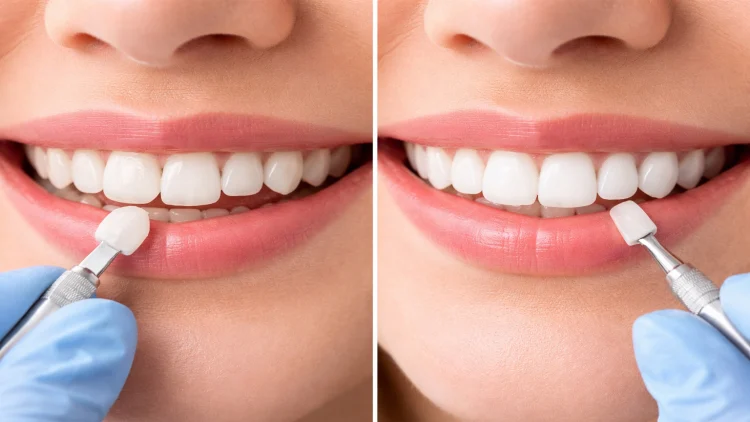
Dental bonding is one of the most popular cosmetic dentistry treatments available today — and it's easy to see why. It's fast, affordable, minimally invasive, and capable of delivering dramatic improvements in a single appointment. Whether you're dealing with a chipped tooth, a gap in your smile, surface discoloration, or slightly uneven edges, dental bonding can address all of these concerns with surprising precision.
At Comfy Dental Care in Las Vegas, Dr. Kevin Khorshid and his experienced cosmetic team perform dental bonding procedures every week — and the before-and-after transformations speak for themselves. This article gives you an honest, detailed look at what happens before, during, and after the procedure so you know exactly what to expect.
What Is Dental Bonding?
Dental bonding is a cosmetic dental procedure in which a tooth-colored composite resin material is applied to the surface of a tooth, carefully sculpted, and then hardened using a special curing light. The result is a seamless, natural-looking restoration that blends with the surrounding teeth.
Unlike veneers or crowns, bonding doesn't require significant removal of tooth enamel, making it a fully reversible procedure for most cases. It can be completed in a single visit — usually in 30 to 60 minutes per tooth — with no anesthesia required unless filling a cavity at the same time.
You can learn more about the procedure itself, including what to expect step by step, on our dedicated dental bonding Las Vegas services.
What Dental Bonding Can Fix: Common "Before" Scenarios
Patients who seek dental bonding come in with a wide range of concerns. Here are the most common "before" situations that bonding is used to correct:
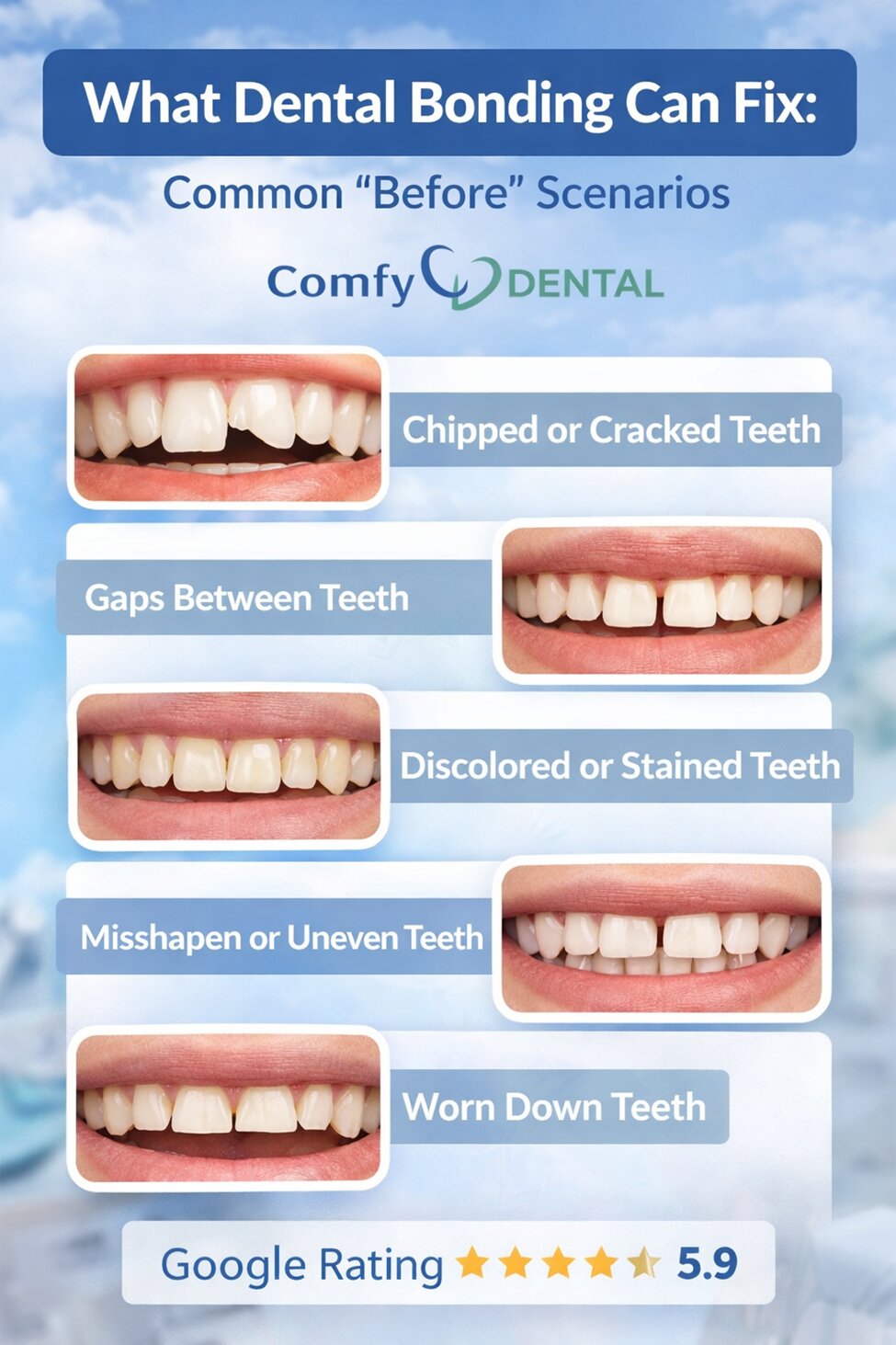
- Chipped or cracked teeth — small breaks or fractures that affect the shape and appearance of a tooth
- Discoloration or staining — especially intrinsic stains that don't respond to whitening treatments
- Small gaps between teeth — minor spacing issues that affect smile symmetry
- Uneven or irregularly shaped teeth — teeth that are shorter, longer, or differently shaped than their neighbors
- Worn enamel — enamel erosion that has left teeth looking flat, dull, or slightly transparent at the edges
- Exposed tooth roots — when gum recession has left sensitive root surfaces exposed
- Minor misalignment — small overlaps or uneven edges that create visual imbalance in the smile
If crooked teeth are a more significant concern alongside these cosmetic issues, it's worth exploring whether cosmetic dentistry can fix crooked teeth — including both bonding and alignment-based options.
Before the Procedure: What Happens First
The journey to a bonded smile starts well before the composite resin ever touches your tooth. Here's what the "before" stage looks like:
Step 1 — Consultation & Examination
Your dentist examines your teeth, takes X-rays if needed, and discusses your smile goals. This is where you'll find out if bonding is the right treatment or whether another option — like veneers or a crown — might serve you better. You can schedule a dental consultation at Comfy Dental Care to get a personalized assessment.
Step 2 — Shade Matching
Your dentist uses a shade guide to select a composite resin color that matches your natural enamel as closely as possible. If you're planning to whiten your teeth, this should be done before bonding — since the resin is set to a fixed color and won't respond to bleaching agents later.
Step 3 — Tooth Preparation
In most cases, very little preparation is needed. The surface of the tooth may be lightly roughened and a conditioning liquid applied to help the resin adhere securely. No drilling or significant enamel removal is typically required, and anesthesia is usually not necessary.
Good to Know: If you're considering whitening your natural teeth before bonding, this is the ideal time to do it. Our professional teeth whitening in Las Vegas can brighten your enamel first so your bonding is matched to your ideal shade — giving you the most harmonious, natural-looking result.
During the Procedure: Step-by-Step
One of the biggest advantages of dental bonding is how quick and comfortable the procedure is. Most patients are in and out within an hour. Here's what happens during the appointment:
- The tooth surface is lightly etched and a bonding agent is applied to create a strong foundation for the resin.
- The tooth-colored composite resin — which has a soft, putty-like consistency — is applied to the tooth in layers.
- Your dentist carefully molds and sculpts the resin to the desired shape, filling in chips, closing gaps, or building up worn areas.
- A special UV or LED curing light is used to harden each layer of resin quickly and securely.
- Once the resin is hardened, it is trimmed, shaped, and polished until it matches the natural sheen of the surrounding teeth.
Want to know more about exactly how long this process takes? Our post on how long the teeth bonding procedure takes breaks down the timeline in more detail.
After the Procedure: The Transformation You Can Expect
The "after" is the part patients love most — and the contrast compared to the "before" is often remarkable. Here's a realistic look at what changes once dental bonding is complete:
Before Bonding
- Chipped or jagged tooth edges
- Visible dark spots or staining
- Noticeable gap between front teeth
- Uneven tooth length or shape
- Dull, worn-down enamel
- Self-consciousness when smiling
After Bonding
- Smooth, seamless tooth shape
- Even, natural-looking color
- Closed gap with balanced spacing
- Uniform tooth proportions
- Bright, polished surface finish
- Confidence to smile freely
Results are immediate — you leave the appointment with your completed smile. There's no recovery period, no swelling, and no downtime. Most patients are back to their normal routine the same day.
The First 48 Hours After Dental Bonding
While dental bonding has no true recovery period, there are a few things to keep in mind in the first couple of days:
- Avoid dark-colored foods and beverages — coffee, tea, red wine, and berries — for at least 48 hours. Composite resin is most susceptible to staining in this early window.
- Stay away from hard or crunchy foods that could chip or dislodge the freshly hardened resin.
- Don't use your teeth to bite nails, open packages, or chew on pens — even one forceful contact can damage new bonding.
- Some patients experience mild tooth sensitivity for a day or two, especially around the bonded area. This is normal and temporary.
- If your bite feels slightly off after the procedure, call your dentist — a quick adjustment is all it usually takes.
Long-Term Care: Making Your Results Last
Dental bonding is durable, but it does require care to maintain its appearance and longevity. With proper habits, bonding on front teeth can last 4 to 8 years — sometimes longer. To learn more about what affects its lifespan, our article on how long dental bonding lasts covers all the key factors in detail.
Here are the most important maintenance habits:
- Brush gently twice daily using a soft-bristled toothbrush and non-abrasive toothpaste (avoid whitening toothpastes that can scratch the resin surface)
- Floss daily, paying special attention to the edges of bonded teeth where plaque can accumulate
- Minimize staining beverages or rinse with water immediately after consuming them
- Avoid biting on hard objects — ice, hard candy, popcorn kernels
- If you grind your teeth at night, ask your dentist about a custom nightguard to protect your bonding
- Schedule regular dental exams and cleanings so your dentist can monitor the bonding and polish it if needed
To avoid common pitfalls that shorten the life of bonding, it's also worth reading about the top dental bonding mistakes to avoid — a helpful resource for anyone who has just had the procedure done.
Is Dental Bonding the Right Choice for Your Smile?
Dental bonding is an excellent fit for many patients, but it's not the right solution for every situation. It works best for minor to moderate cosmetic concerns on otherwise healthy teeth. For more extensive transformations — such as severe discoloration, significant enamel loss, or major shape corrections — your dentist may recommend porcelain veneers or dental crowns, which offer greater durability and a wider range of correction.
The best way to find out which option is right for you is to sit down with an experienced cosmetic dentist. At Comfy Dental Care, every treatment recommendation is based on your unique dental health, goals, and budget — not a one-size-fits-all approach. Browse our full range of smile-enhancing procedures to see where bonding fits among other popular cosmetic options.
Why Las Vegas Patients Choose Comfy Dental Care for Bonding
At Comfy Dental Care, Dr. Kevin Khorshid brings more than two decades of cosmetic and restorative dentistry experience to every patient. His attention to shade matching, sculpting precision, and final polish is what separates a good bonding result from a great one — and patients consistently notice the difference.
The practice is built around making you feel comfortable from the moment you walk in. Whether you're nervous about dental visits or just want a quick cosmetic fix on your lunch break, the team at Comfy Dental ensures the experience is smooth, stress-free, and well worth your time.
Frequently Asked Questions About Dental Bonding Before and After
How dramatic is the change from dental bonding before and after?
The change depends on the original concern being treated. For patients with chipped, gapped, or discolored teeth, the transformation is often striking — creating a noticeably more even, bright, and symmetrical smile in a single visit. For minor corrections like slight edge smoothing, the improvement is more subtle but still meaningful.
Does dental bonding look natural?
Yes. The composite resin used in dental bonding is carefully color-matched to your existing teeth and sculpted to mimic the natural contours of enamel. When done by a skilled cosmetic dentist, bonding is virtually indistinguishable from a natural tooth surface.
Is dental bonding painful?
For the vast majority of patients, dental bonding is completely painless. No drilling or removal of enamel is typically required, and anesthesia is usually not needed. Patients may notice mild sensitivity around the bonded area for a day or two afterward, but this resolves on its own.
How long after dental bonding can I eat normally?
You can eat soft foods right after your procedure. It's recommended to avoid hard, sticky, or stain-causing foods for the first 48 hours to allow the resin to fully set and avoid early discoloration. After that, you can resume your normal diet with a few ongoing precautions for the life of the bonding.
Can dental bonding be redone if it chips or stains?
Absolutely. One of the advantages of composite bonding is that it can be repaired, touched up, or fully replaced without any harm to the underlying tooth. If your bonding chips, discolors, or simply ages over time, your dentist can refresh it to restore your smile.
How do veneers compare to bonding in terms of before-and-after results?
Porcelain veneers offer a more dramatic and longer-lasting transformation than bonding, making them ideal for patients with multiple concerns or more severe cosmetic issues. However, veneers require permanent enamel removal and come at a higher cost. Dental bonding is the preferred choice for minor corrections, single-tooth improvements, or patients who want a reversible option before committing to veneers.
Will my bonded tooth need special care compared to my other teeth?
Not significantly. Good daily brushing, flossing, and regular dental visits are sufficient to keep bonded teeth in great shape. The main adjustments involve being mindful of hard foods, staining beverages, and habits like nail-biting — all of which can shorten the life of the bonding material.