
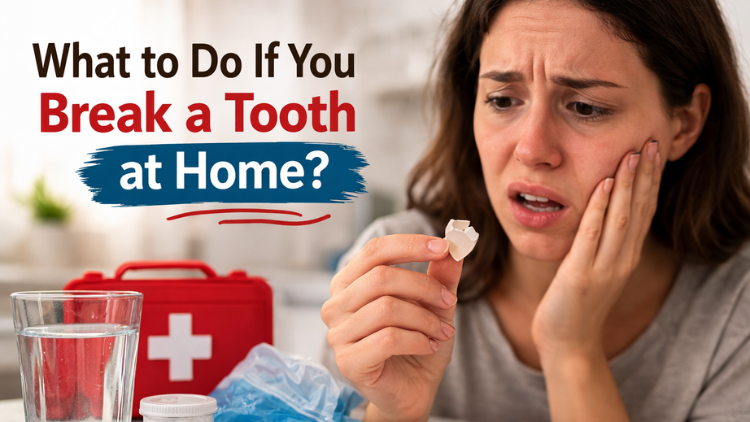
Breaking a tooth can be painful and frightening, whether it happens while eating, during sports, or from an accidental fall. Acting quickly and correctly at home can reduce pain, prevent infection, and improve the chances of saving your tooth before you see a dentist. This guide explains exactly what to do if you break a tooth and when to seek emergency dental care.
Common Causes of a Broken or Chipped Tooth
A broken or chipped tooth can happen unexpectedly and for several reasons. Common causes include biting down on hard foods, sports injuries, accidents, teeth grinding, or untreated cavities that weaken the enamel. Understanding the cause can help prevent further damage and guide proper treatment. Some of the most common causes include:
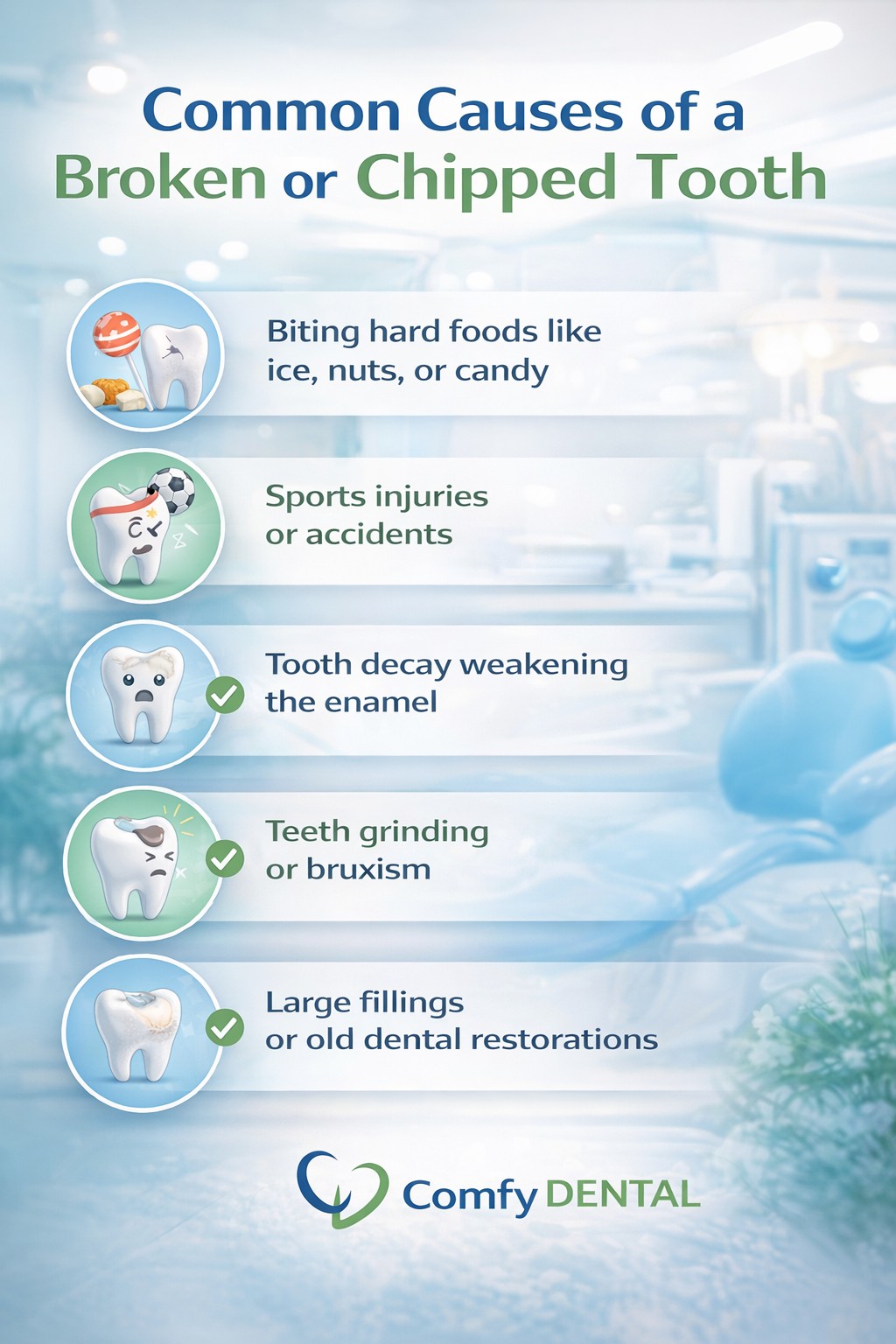
- Biting hard foods like ice, nuts, or candy
- Sports injuries or accidents
- Tooth decay weakening the enamel
- Teeth grinding or bruxism
- Large fillings or old dental restorations
Immediate Steps to Take at Home
If you break or chip a tooth, acting quickly can reduce pain and prevent complications. Rinse your mouth with warm water, apply a cold compress to reduce swelling, and save any broken pieces if possible. Temporary dental cement from a pharmacy may help protect the area until you see a dentist.
1. Rinse Your Mouth Gently
Use warm salt water to clean the area and remove bacteria. This helps reduce infection risk and soothe irritation.
2. Stop Bleeding if Present
Apply gentle pressure with clean gauze or cloth for about 10 minutes until bleeding stops.
3. Save Any Tooth Fragments
If a piece of tooth breaks off, store it in milk, saline solution, or saliva and bring it to your dentist. Sometimes the fragment can be reattached.
4. Reduce Pain and Swelling
Apply a cold compress to the outside of your cheek for 10–15 minutes. Take over-the-counter pain relievers if needed and avoid very hot or cold foods.
5. Protect the Tooth
If the tooth has sharp edges, cover it with dental wax or sugar-free gum to prevent cuts inside your mouth.
What You Should Avoid if you break your tooth
Avoid chewing on the affected side to prevent worsening the damage. Do not use super glue or household adhesives to fix the tooth, as they can cause infection or further harm. Also, stay away from very hot, cold, or sugary foods if the tooth is sensitive. Certain actions can worsen the damage:
- Do not chew on the affected side
- Avoid sticky or hard foods
- Do not attempt to glue the tooth yourself
- Avoid ignoring persistent pain or swelling
When to See an Emergency Dentist
You should see an emergency dentist as soon as possible if you experience severe pain, bleeding, swelling, or signs of infection. Immediate dental care is especially important if the tooth’s inner pulp is exposed. Prompt treatment can save the tooth and prevent long-term complications. Immediate dental care is necessary if you experience:
- Severe pain
- Continuous bleeding
- Swelling in gums or face
- A knocked-out or deeply cracked tooth
- Signs of infection such as fever or pus
Professional Treatment Options for a Broken Tooth
Treatment depends on the severity of the damage. Minor chips may be repaired with dental bonding, while larger fractures might require crowns, veneers, or root canal therapy. In severe cases, extraction and replacement options such as dental implants may be recommended.
Your dentist will recommend treatment based on the extent of the damage to your tooth. For small chips or minor cracks, dental bonding is often enough to restore the tooth’s appearance and function.
If there is a larger fracture or the tooth has become weak, a custom dental crown may be placed to strengthen and protect it. Many patients review before and after results of dental crown treatments to understand how effective this solution can be. In cases where the nerve is exposed or infected, root canal therapy may be necessary to save the tooth, while dental veneers can address cosmetic concerns. If the tooth cannot be preserved, a dental implant may be recommended as a durable, long-term replacement option.
How to Prevent Future Tooth Damage
Preventing tooth damage starts with good oral hygiene and regular dental check-ups. Wearing a mouthguard during sports, avoiding chewing hard objects, and addressing teeth grinding can significantly reduce risks. Maintaining strong enamel through proper nutrition also helps protect your teeth. Preventive care can reduce the risk of tooth fractures:
- Wear a mouthguard during sports
- Avoid chewing ice or hard objects
- Treat cavities early
- Use a night guard if you grind your teeth
- Maintain regular dental checkups
Having a broken tooth? Contact Comfy Dental Care
A broken tooth is often considered a dental emergency, but the right steps at home can make a big difference before you reach the dentist. Cleaning the area, controlling pain, protecting the tooth, and seeking prompt professional care can help preserve your smile and prevent complications.
If you experience a broken tooth, Comfy Dental Care will ensure proper evaluation and treatment. Schedule an appointment today by calling (702) 869-8200.
FAQs About What to Do If You Break a Tooth at Home
What should I do immediately after breaking a tooth?
You should rinse your mouth gently with warm salt water, stop any bleeding with clean gauze, and apply a cold compress to reduce swelling. If a piece of the tooth broke off, save it in milk or saliva and contact a dentist as soon as possible for evaluation.
Can a broken tooth heal on its own?
No, a broken tooth cannot heal naturally because tooth enamel does not regenerate. Even if pain decreases, professional dental treatment is necessary to repair the damage and prevent infection or further complications.
How can I relieve broken tooth pain at home?
You can reduce pain by applying a cold compress, taking over-the-counter pain relievers, rinsing with warm salt water, and avoiding chewing on the affected side. Covering sharp edges with dental wax or sugar-free gum can also prevent irritation inside the mouth.
Is a broken tooth considered a dental emergency?
Yes, a broken tooth can be a dental emergency, especially if there is severe pain, bleeding, swelling, or exposed nerves. Immediate dental care improves the chances of saving the tooth and prevents infection or permanent damage.
How long can I wait before seeing a dentist for a broken tooth?
You should see a dentist as soon as possible, ideally within 24 hours. Delaying treatment can increase the risk of infection, nerve damage, and more complex or expensive dental procedures later.